The Morning Meditation Effect: 8 Ways Successful People Use Stillness for Success
The world’s most successful people are not successful despite taking time for stillness every morning. They are successful, in significant part, because of it. Morning meditation is not a luxury for the unhurried or a spiritual practice for the mystically inclined. It is a high-performance tool — one of the most neurologically powerful, practically effective, and scientifically validated tools available — used deliberately by an extraordinary proportion of the people who consistently produce extraordinary results.
📋 In This Article
- The Stillness Edge — Why High Performers Meditate
- Who Meditates — The Successful People Who Swear By It
- Way 1: They Train Sustained Focus
- Way 2: They Reduce Stress and Emotional Reactivity
- Way 3: They Access Their Clearest Thinking
- Way 4: They Amplify Creative Insight
- Way 5: They Set Intention Before the Day Sets It for Them
- Way 6: They Build the Brain for Better Decisions
- Way 7: They Develop Unshakeable Resilience
- Way 8: They Create a Daily Source of Inner Authority
- Real Stories of the Meditation Effect
- How to Start Your Morning Stillness Practice Today
The Stillness Edge — Why High Performers Meditate
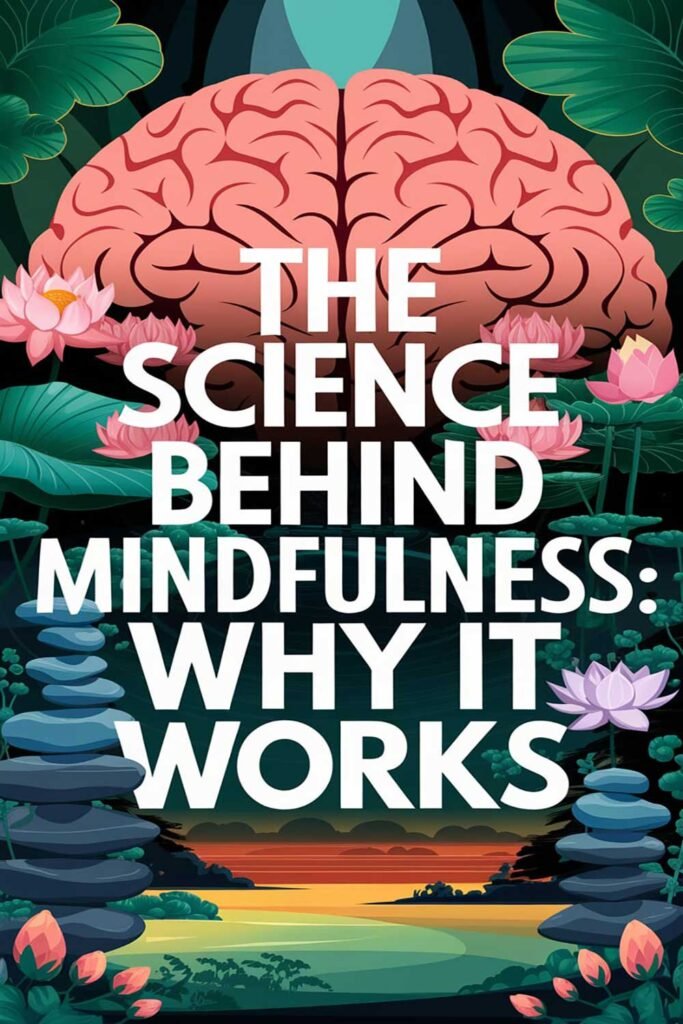
For most of human history, meditation was understood primarily as a spiritual practice — a method for achieving enlightenment, union with the divine, or liberation from suffering. The modern scientific examination of meditation has confirmed much of what contemplative traditions have always claimed while revealing something that the ancient practitioners perhaps did not explicitly articulate: meditation is one of the most powerful neurological performance-enhancement tools ever studied. It literally changes the structure and function of the brain in ways that produce measurable improvements in exactly the capacities that high performance demands.
The neuroscience of meditation is now substantial and remarkably consistent. Studies from Harvard, Stanford, MIT, Oxford, and dozens of other research institutions have documented structural changes in the meditating brain — increased gray matter density in regions associated with attention, learning, and emotional regulation; decreased activity in the amygdala, the brain’s stress and reactivity center; thickened prefrontal cortex tissue, the region responsible for executive function, decision-making, and focused attention. These are not subtle or theoretical changes. They are measurable, significant, and produced by a practice that requires nothing more than regular periods of directed stillness.
The morning is the optimal time for this practice for reasons that align precisely with the neurological opportunity the early hours represent. The brain’s neuroplasticity — its capacity to change and strengthen through experience — is heightened in the morning hours, when cortisol is elevated and the brain is at its most receptive to new learning and pattern-formation. Meditation practiced in this window does not just produce the immediate benefits of the session. It leverages the morning brain’s enhanced plasticity to accelerate the structural changes that make every subsequent session more beneficial. This is the compounding effect that consistent morning meditators describe: the practice gets deeper over time, not just more habitual.
Research shows measurable structural brain changes after just 8 weeks of daily meditation averaging 27 minutes per session — changes visible on MRI scans
Regular meditators show up to 40% lower cortisol levels during stressful situations compared to non-meditators — translating directly into better performance under pressure
Research suggests the majority of top-performing executives report using some form of mindfulness or meditation practice as part of their daily routine
What Happens in the Brain During Morning Meditation
Understanding the specific neurological mechanisms of meditation helps explain why it produces such wide-ranging benefits across seemingly unrelated domains of performance. Meditation does not have one effect on the brain — it has many, operating simultaneously across different systems.
Prefrontal Cortex Strengthening
The brain region responsible for executive function, decision-making, impulse control, and focused attention grows measurably thicker with regular meditation practice — producing directly improved performance in all of these domains.
Amygdala Calming
The amygdala — the brain’s threat detection and stress response center — shows significantly reduced reactivity in regular meditators, producing the lower emotional reactivity and stress response that most meditators describe as their first noticeable benefit.
Improved Neural Connectivity
Meditation strengthens the connections between the prefrontal cortex and the amygdala — the regulatory pathway through which reason moderates emotion. This is the neurological basis of improved emotional regulation and the ability to respond rather than react.
Default Mode Network Regulation
The default mode network — the brain system responsible for mind-wandering, rumination, and self-referential thinking — shows reduced over-activity in meditators, producing less anxious self-focus and more present-moment engagement with actual tasks and people.
Who Meditates — The Successful People Who Swear By It
The meditation practice is not theoretical for the world’s highest performers. These are real practices embedded in the daily routines of people whose results speak for themselves. The list of consistently successful people who maintain a regular meditation practice — and who attribute a significant portion of their clarity, creativity, and resilience to it — is both long and diverse.
“Meditation is the most significant thing I’ve ever done for myself. It’s the one hour of the day that belongs entirely to me.”
Practiced Zen meditation daily for decades. Described it as central to his capacity for clarity, creativity, and the ability to cut through complexity to the essential.
Schedules 90+ minutes of “nothing” in his calendar daily — protected buffers of stillness that he describes as the source of his best thinking and strategic clarity.
“Meditation has given me the equanimity to see things clearly rather than reactively. It is the single biggest reason for my success.” Meditates twice daily.
Began meditating after collapsing from exhaustion. Credits her morning stillness practice with the transformation of her relationship with success, sleep, and her own wellbeing.
Uses meditation and mindfulness as a central component of his performance preparation — for managing pressure, maintaining focus, and recovering mentally between games.
These are not people who have achieved success and then found leisure for spiritual practice. These are people who consistently cite their stillness practice as a primary source of the qualities that produce their success: the clarity, the composure, the creativity, the sustained focus, and the emotional resilience that set them apart in their fields. The meditation is not separate from the performance. It is one of its primary generators.
Meditation is the only evidence-based practice that directly trains the neural mechanisms of attention — the foundation of all high performance.
Attention is the scarcest and most valuable resource in the modern economy — and it is under continuous, sophisticated attack from every direction. Social media, notifications, email, news, entertainment, and the perpetual stimulation of the connected world are engineered — by teams of behavioral psychologists and data scientists — to capture and fragment your attention continuously. The result is an epidemic of attentional impairment that most people accept as simply how the modern mind works. It is not. It is a trained deficit, and like all trained deficits, it can be untrained.
Meditation is precisely the practice of training attention. In its most basic form — returning your focus to your breath every time your mind wanders — meditation is performing exactly the same action as a focused work session, but with a simplified object: instead of returning attention to a complex task after a distraction, you are returning it to a single breath. Each return is a repetition — a strengthening of the neural pathways that enable voluntary direction of attention. After weeks of this practice, the same capacity is available for every demanding cognitive task: the ability to notice when focus has wandered and to return it deliberately, with less effort and greater reliability than before the practice began.
Research from the University of Pennsylvania’s Positive Neuroscience Center found that just eight minutes of focused attention meditation per day significantly improved attentional performance measures. Longer practice produced proportionally greater improvements. The most successful knowledge workers in any field — the ones who produce the most, the fastest, and at the highest quality — are distinguished primarily by their capacity for sustained, directed attention. That capacity is trainable. Meditation is the training.
A 2010 study published in Psychological Science found that just two weeks of mindfulness training improved reading comprehension, working memory capacity, and the ability to resist distracting thoughts — three of the most direct measures of focused attention. The researchers concluded that brief mindfulness training significantly improves visuospatial processing, working memory, and executive functioning. These are precisely the cognitive capacities that distinguish high performers in demanding fields.
The person who can remain composed under pressure while others react emotionally holds a competitive advantage in virtually every high-stakes situation.
Stress is the primary performance killer in high-demand environments — not because it feels bad, though it does, but because of what it does to the brain. Elevated cortisol and the stress response neurologically impair exactly the cognitive capacities that peak performance requires: the prefrontal cortex goes offline, reducing executive function, planning capacity, and nuanced decision-making. The amygdala activates, triggering reactive rather than responsive behavior. Working memory contracts. Creative thinking narrows. The brain that is flooded with stress hormones is not a high-performance brain — it is a survival brain, and survival brain thinking is exactly what the most demanding situations in business, leadership, and creative work do not need.
Morning meditation addresses this at the neurological level by literally reducing the amygdala’s baseline reactivity. Regular meditators show measurably smaller amygdala responses to identical stressors than non-meditators — not because they feel the stress less acutely in the moment, but because the neural threshold for activation is higher. The stressor that triggers a full cortisol response in the unreformed stress system produces a more measured response in the meditated one. This is not suppression — it is regulation. The difference is the difference between a thermostat that maintains a comfortable temperature and a furnace that cycles between blazing and freezing.
The practical consequence of this reduced reactivity is visible in every high-pressure situation a regular meditator navigates: the board presentation that would have produced paralyzing anxiety is met with calm alertness. The difficult client conversation that would have triggered defensiveness is navigated with genuine curiosity. The unexpected crisis that would have produced reactive decision-making is approached with the deliberate problem-solving quality that the situation actually requires. This is not a personality transformation — it is a neurological one, produced by the consistent practice of meeting challenging stimuli (difficult thoughts during meditation) without automatic reaction.
A landmark study by Sara Lazar at Harvard found that experienced meditators showed significantly less amygdala activation in response to emotionally provocative stimuli than non-meditators — and that the degree of reduction was directly correlated with years of practice. A separate study by Richard Davidson found that an eight-week mindfulness program produced measurable reductions in amygdala size and reactivity, with parallel increases in positive emotional states and immune function. Meditation changes the stress response at the hardware level.
Stillness does not empty the mind. It clarifies it — separating the signal from the noise so the most important thinking can be heard.
The human mind processes an estimated 6,000 thoughts per day — most of them repetitive, anxiety-driven, or pulled from the past or future rather than meaningfully engaged with the present. This internal noise is not neutral. It consumes cognitive bandwidth, clutters decision-making with irrelevant considerations, and makes the quieter, deeper thinking that produces genuine insight very difficult to access. The person whose mind is perpetually full of this noise is working with a significantly diminished cognitive resource, even if the noise itself is familiar enough to feel like normal mental activity.
Morning meditation creates a period of deliberate mental decluttering before the day’s information and demands add their weight to the existing noise. The meditator who sits in stillness for fifteen minutes before beginning their day is not simply resting — they are allowing the overnight’s unprocessed residue to settle, creating the mental clarity from which the day’s most important thinking can proceed without interference. This is the experience most regular meditators describe: arriving at their work after meditation with a quality of mental openness and clarity that is genuinely different from the cluttered, already-reactive state they would have brought had they gone directly from alarm clock to inbox.
Steve Jobs described this effect with characteristic directness: “If you try to calm your mind you create more agitation, but over time it does calm, and when it does there’s room to hear more subtle things. You begin to see more clearly and more in the present, and your intuition starts to blossom.” The clarity he describes is not the absence of thought — it is the settling of the surface-level noise that allows the deeper, more important thinking to become audible. The stillness does not empty the mind. It makes it possible to hear what the noise has been covering.
Research by Natalia Karelaia and Jochen Reb at INSEAD business school found that mindful leaders — those who practice regular meditation — make significantly better decisions than non-mindful leaders in ambiguous, high-stakes situations. They are better at recognizing relevant information, less biased by irrelevant emotional considerations, and more likely to consider multiple perspectives before deciding. Mental clarity, it turns out, is a trainable asset with directly measurable decision-quality outcomes.
The most valuable creative insights arrive not during intense focus but during the relaxed, open awareness that meditation cultivates and sustains.
Creativity research has consistently identified two distinct cognitive modes involved in creative work: a focused, analytical mode that evaluates and develops ideas, and a diffuse, associative mode that generates unexpected connections and novel insights. The insight experiences most people associate with genuine creativity — the “aha moment,” the solution that arrives in the shower, the connection between two seemingly unrelated ideas that suddenly makes everything click — occur almost exclusively in the diffuse mode, when the brain is in a relaxed, open state of alert awareness rather than in tight, directed focus. The term for this brain state is alpha wave activity, and it is produced most reliably by two things: rest and meditation.
Morning meditation is therefore not just a productivity practice for knowledge workers — it is a creativity amplifier of genuine significance. The meditator who maintains a regular practice develops a more robust and more reliably accessible alpha wave state, meaning that the creative insights that the diffuse mode produces are more frequent, more available on demand, and more consistently accessible during the work day. This is why so many creative professionals — musicians, writers, filmmakers, entrepreneurs, designers — cite meditation as one of their most important creative tools. It is not metaphysical. It is neuroscience.
David Lynch, the filmmaker, has been an advocate of Transcendental Meditation for decades and has described it as the primary source of his creative ideas — describing the meditative state as “diving into a river of ideas” that is unavailable in the surface-level mental activity of ordinary waking consciousness. McCartney, Katy Perry, Lena Dunham, and many other prominent creative figures describe similar experiences. The morning stillness practice is not keeping them from their creative work. It is producing it — by reliably accessing the brain state in which the most valuable creative thinking naturally occurs.
Research published in Frontiers in Psychology found that open monitoring meditation — a style in which meditators observe whatever arises in awareness without directing attention to a specific object — significantly increased divergent thinking, the cognitive measure most closely associated with creative output. Participants generated significantly more original ideas and more unusual solutions to creative problems after open monitoring meditation than in control conditions. Creativity is not a fixed trait. It is a trainable mental state.
The day you do not intentionally design will be designed for you — by the inbox, by the notifications, by whoever reaches you first. Morning stillness creates the intentional architecture of a proactive day.
Most people begin their days in reactive mode — responding to the most recent input before they have established any intentional direction of their own. The alarm sounds, the phone is checked, the notifications frame the first thoughts of the day around what others need, what has happened overnight, and what the world is asking of them before they have had a single moment to establish what they themselves intend. From this reactive starting point, the day tends to proceed reactively — pulled by the urgent rather than directed by the important, responsive to the demands that present themselves rather than proactive toward the goals that matter most.
Morning meditation interrupts this reactive cascade before it begins by creating a protected window of internal orientation. In the stillness, successful people engage in a deliberate practice of asking: who am I today, what matters most today, and how do I intend to show up? These are not necessarily verbal questions with verbal answers — they may be felt rather than articulated, sensed as a quality of presence rather than stated as a list of intentions. But the orienting effect is real and measurable. The person who has spent ten minutes in intentional stillness before beginning their day consistently reports a different quality of agency over their subsequent hours than the one who began reactively.
Many high-performing meditators combine their stillness practice with a brief visualization of their day — mentally rehearsing their most important interaction, seeing themselves handling the day’s most challenging moment with composure and effectiveness, or simply holding an image of the person they intend to be in the day that is beginning. This is not magical thinking — it is applied neuroscience. Mental rehearsal activates many of the same neural pathways as the actual performance, priming the brain for behaviors consistent with the rehearsed image. The day that begins with intentional stillness is a different day from the one that begins with a phone check. Every time.
Research on implementation intentions — the well-documented psychological phenomenon in which mentally rehearsing a planned behavior significantly increases the probability of its execution — shows that morning intention-setting produces measurable improvements in goal-directed behavior throughout the day. Studies on mental rehearsal in performance psychology consistently show that mental practice produces improvements in performance quality comparable in some domains to an equivalent period of physical practice. The morning intention is not decoration. It is functional preparation.
Every important decision you make is only as good as the brain you make it with. Morning meditation is the daily maintenance of that brain.
Decision-making quality is not a fixed variable — it fluctuates significantly based on the cognitive and emotional state of the decision-maker. Research on decision fatigue has demonstrated that the quality of decisions deteriorates with each successive decision made throughout the day. Equally well-documented is the impact of emotional state on decision quality: elevated anxiety, fear, or anger systematically bias decision-making toward risk-aversion, short-termism, and reactive rather than strategic responses. The person making important decisions from a state of stress, distraction, or emotional activation is making different decisions — typically worse ones — than they would make from a state of calm, focused, emotionally regulated awareness.
Morning meditation directly improves decision quality through both pathways. By starting the day before decision fatigue has accumulated, and by producing the calm, regulated mental state that best supports nuanced judgment, meditation creates the optimal conditions for the day’s most important decisions. Successful people who meditate consistently report that they make their most significant decisions — the ones that most require the highest quality of thinking — from the state of clarity that follows their morning practice rather than from the reactive state that follows an unmeditated morning of reactive email and news consumption.
The prefrontal cortex strengthening that results from regular meditation practice produces a lasting improvement in exactly the cognitive functions most relevant to good decision-making: the capacity to consider multiple options without prematurely closing on the first available one, the ability to weigh long-term consequences against short-term pressures, the resistance to emotional biases that distort judgment, and the meta-cognitive awareness to recognize when a decision is being driven by fear or desire rather than by clear-eyed assessment. These are not small improvements. In the context of high-stakes decisions — business strategy, relationship choices, financial commitments — they are the difference between decisions that serve the long-term good and decisions that simply feel good in the moment they are made.
Research by Adam Grant and Francesca Gino found that mindfulness practice significantly improved negotiation outcomes — with mindful negotiators achieving agreements of 12% higher value than non-mindful negotiators in the same simulations. The mechanism was increased recognition of integrative options — solutions that create more value for all parties — which requires the cognitive openness and emotional non-reactivity that meditation specifically develops. Better decisions produce better outcomes. Meditation produces better decisions.
The daily practice of being present with discomfort without reacting to it — the core mechanism of meditation — is identical to the practice of navigating life’s difficulties without being undone by them.
Every meditation session is a small laboratory for the development of resilience. When you sit in stillness, difficult things arise: restlessness, discomfort, boredom, difficult thoughts and memories, the urgency of all the things you feel you should be doing instead. The practice is not to suppress these or to make them go away — it is to be present with them without automatically reacting to them. You notice the restlessness without getting up. You observe the difficult thought without following it into a spiral. You feel the discomfort without treating it as an emergency. This practice — of being with difficulty without automatic reaction — is exactly the skill that resilience in the rest of life requires.
The research on meditation and resilience consistently shows that regular meditators recover more quickly from setbacks, report higher levels of positive affect following negative experiences, and demonstrate greater cognitive flexibility in the face of challenges than non-meditators. These are not simply personality differences between people who choose to meditate and those who don’t. Longitudinal studies that follow the same individuals through periods of meditation and non-meditation show the same pattern: the meditation produces the resilience, and the resilience diminishes in its absence. The daily sitting is not a retreat from life’s difficulties. It is their training ground.
Viktor Frankl’s observation — that the last of the human freedoms is the ability to choose one’s attitude in any given set of circumstances — describes the outcome that a resilience practice based in meditation produces. The regular meditator has practiced, thousands of times, the choice to remain present and non-reactive in the face of inner difficulty. This practice does not eliminate the difficulty when it arises in life. But it develops a genuine and growing capacity to meet that difficulty without being consumed by it — to navigate setbacks, failures, losses, and disappointments with the quality of presence and non-reactivity that makes recovery possible and occasionally even transforms the difficulty into growth.
Research by Philippe Goldin at Stanford found that mindfulness training significantly reduced anxiety and depression symptoms in participants with social anxiety disorder — with brain scans showing increased prefrontal cortex activity and decreased amygdala reactivity during exposure to anxiety-provoking stimuli. Separately, Jon Kabat-Zinn’s extensive research on Mindfulness-Based Stress Reduction (MBSR) found that an 8-week program produced significant and lasting improvements in psychological resilience, with effects persisting for years after the program ended. Resilience is not a fixed trait. It is a trainable skill.
The person who has spent time in stillness each morning knows who they are before the world tells them. That knowing is power.
In a world of perpetual external input — news, social media, colleagues’ opinions, cultural messaging, the accumulated weight of others’ expectations — one of the most significant contributions morning meditation makes to success is the daily renewal of contact with your own inner authority. The person who has never developed a practice of regular stillness lives in a state of continuous external orientation: their mood is shaped by the morning news, their confidence is contingent on the morning’s email reception, their sense of direction is borrowed from whatever voice spoke loudest most recently. This is not weakness. It is the default state of the unmeditated life in the attention economy.
Morning meditation creates, through consistent practice, a different default: the daily return to a place of inner settledness that exists independent of external conditions. The meditator who has sat in stillness for fifteen minutes does not encounter the morning’s first difficult email from the same psychological position as the one who picked up the phone immediately upon waking. They encounter it from a position of prior self-contact — a quality of inner grounding that does not require external validation to be real, does not depend on the email’s content to be stable, and does not get determined by the morning’s information before the meditator has had a chance to establish their own ground.
This inner authority — the quality of knowing who you are independent of what is happening around you — is one of the most consistent descriptions offered by long-term meditators when asked what the practice has given them. Not certainty about outcomes. Not the absence of doubt or difficulty. But a stable internal reference point from which to navigate all of it — a place of quiet knowing that persists through the day’s turbulence as the foundation from which genuinely wise action becomes possible. Ray Dalio describes this as the source of his investment clarity. Oprah describes it as the center from which her entire life is organized. It is available, through consistent practice, to anyone willing to spend the time in the stillness to find it.
Research on trait mindfulness — the stable, dispositional quality of present-moment awareness that develops through regular meditation practice — consistently shows that higher trait mindfulness is associated with greater psychological autonomy, stronger sense of personal values, and higher authenticity in decision-making. People with high trait mindfulness are less susceptible to social pressure, more consistent in living according to their stated values, and report greater life satisfaction and meaning. Inner authority, it turns out, is both measurable and trainable.
Real Stories of the Meditation Effect
Melissa was a regional vice president at 41 who had spent twenty years succeeding by working harder than everyone else — more hours, more intensity, more relentless forward motion. By the time she reached her senior role, the same approach that had built her career was dismantling her health. She slept poorly, her anxiety was constant background noise, and the quality of her decision-making — which she was honest enough to notice — had deteriorated. She was more reactive, less creative, and making choices from a defensive rather than a strategic posture. She had achieved the success she had worked for and found herself less able to lead effectively from within it than she had been at earlier, lower-pressure stages of her career.
A company wellness program introduced her to a ten-minute guided morning meditation. She approached it with the same skepticism that most high-achievers bring: this seemed like the opposite of getting things done. But she tried it for thirty days because the burnout was severe enough that she was willing to try anything. The changes were not dramatic in the first week. By week three, she noticed that she was arriving at her first meetings of the day in a genuinely different state — more present, less defensive, more capable of listening rather than waiting to respond. By week six, her team had independently begun commenting on a change in her leadership quality without knowing about the meditation.
Three years later, Melissa meditates for twenty minutes every morning as an absolute non-negotiable. She has reduced her working hours by 15% and increased the quality and impact of her output significantly. “I used to think that stillness was wasted time,” she says. “I now understand that it was the missing infrastructure. Everything I was trying to build by working harder was being undermined by the lack of it.”
“The twenty minutes I give to stillness every morning produces a version of me that is more effective in the subsequent ten hours than the version I was before I gave it. It is the highest-return investment in my calendar. Nothing else comes close.”
Daniel had started and sold two companies by 35 and was well into building a third when his business coach gave him an unusual assignment: do nothing for fifteen minutes every morning for thirty days. Not plan, not think about the business, not review goals — nothing. Sit. Breathe. Be still. Daniel describes his initial response as genuine incomprehension. He had no framework for the value of doing nothing. His entire identity and his entire model of success were built around doing — more, faster, better. The instruction to do nothing felt like regression, not investment.
The first week was genuinely difficult. His mind raced constantly. He thought about the business, replanned meetings, worried about problems. By week two, something shifted. The mind still raced, but he was beginning to observe the racing rather than simply being the racing — watching his own thoughts with a slight but real quality of detachment that had not been available before. By week three, the morning session was producing a reliable period of genuine quiet in which the quality of his thinking afterward was distinctly different — more creative, more strategic, less reactive to the immediate pressures of the day.
What he discovered — and what he credits with a significant portion of the third company’s success — was that the stillness was not the opposite of his productivity. It was its generator. The clarity about strategic direction that had been obscured by the noise of constant doing became audible in the stillness. The creative solutions to problems he had been forcing arrived naturally when he stopped forcing. “I used to think I had a thinking problem,” he says. “I actually had a noise problem. The meditation solved it.”
“Every business insight that has genuinely mattered in the last three years arrived during or immediately after my morning stillness practice. Not during strategy sessions, not in meetings, not when I was working hardest. In the quiet. That’s not mystical. That’s how creative thinking actually works.”
How to Start Your Morning Stillness Practice Today
The barrier to beginning a morning meditation practice is almost entirely psychological — the conviction that you do not have time, that you cannot do it correctly, that you need special training or equipment or a particular spiritual orientation. None of these are real obstacles. The practice requires nothing more than a place to sit, a timer, and the willingness to begin. Here is the simplest possible starting framework.
Start With 5 Minutes
Not ten. Not twenty. Five. Five minutes is small enough to be genuinely non-negotiable — there is no morning so chaotic that five minutes cannot be found. Begin with five and practice them perfectly. The natural desire to extend will arrive within two weeks if you are consistent.
Same Place, Same Time
The power of habit formation is maximized by environmental consistency. Choose a specific place — a chair, a cushion, a spot at the kitchen table — and use it every morning. The place becomes the trigger and the practice becomes easier to begin each day.
Use Guided Support Initially
Headspace, Calm, Insight Timer, or any guided meditation app provides structure for beginners. Use a guided session for the first thirty days until the practice becomes self-sustaining. The guide is not a crutch — it is scaffolding that you will naturally move beyond when you are ready.
Consistency Over Duration
Five minutes every morning for thirty consecutive days produces more neurological benefit than thirty minutes on the days when motivation is high. Consistency is the primary variable in the structural brain changes that meditation produces. Show up every day. Duration is secondary.
Release the Idea of “Good” Meditation
There is no such thing as a bad meditation session. The wandering mind that you returned to the breath a hundred times did more attentional training than the “perfect” session where the mind barely wandered. The practice is the returning. Every return is a rep.
Track the Effect, Not the Practice
Rather than tracking whether you meditated, track how you feel on days you meditate vs days you don’t. Most people find the data compelling enough to sustain the habit without additional motivation within the first two weeks. The effect is its own evidence and its own incentive.
20 Quotes on Stillness, Meditation, and Inner Peace
“Within you, there is a stillness and sanctuary to which you can retreat at any time and be yourself.”
“Quiet the mind and the soul will speak.”
“Meditation is not about stopping thoughts, but recognizing that you are more than your thoughts and your feelings.”
“The thing about meditation is: you become more and more you.”
“In the beginning you will fall into the gaps in between thoughts — after practicing for years, you become the gap.”
“Meditation is the ultimate mobile device; you can use it anywhere, anytime, unobtrusively.”
“Almost everything will work again if you unplug it for a few minutes — including you.”
“The quieter you become, the more you can hear.”
“You should sit in meditation for twenty minutes every day — unless you’re too busy; then you should sit for an hour.”
“Meditation is not a way of making your mind quiet. It is a way of entering into the quiet that is already there.”
“Respond; don’t react. Listen; don’t talk. Think; don’t assume.”
“The soul always knows what to do to heal itself. The challenge is to silence the mind.”
“Meditation is the practice of making friends with your own mind.”
“In today’s rush, we all think too much — seek too much — want too much — and forget about the joy of just being.”
“Feelings come and go like clouds in a windy sky. Conscious breathing is my anchor.”
“Don’t believe everything you think. Thoughts are just that — thoughts.”
“Meditation is not about feeling a certain way. It’s about feeling the way you feel.”
“When you own your breath, nobody can steal your peace.”
“Peace is the result of retraining your mind to process life as it is, rather than as you think it should be.”
“Meditation is the discovery that the point of life is always arrived at in the immediate moment.”
Imagine thirty days from now…
You have meditated for ten minutes every morning for thirty consecutive days. The practice itself has become familiar — no longer the effort of something new but the comfort of something known. You sit down, set the timer, and the stillness arrives not as something you achieve but as something you return to, like coming home to a place that is always there.
The changes in your daily experience are not dramatic — they are quiet and pervasive. You are less reactive than you were. The situations that previously triggered automatic defensiveness now arrive with a small but genuine pause between stimulus and response — enough space to choose rather than simply discharge. Your focus in demanding work sessions has improved in ways your output is beginning to reflect. The quality of your most important decisions feels different — more grounded, less driven by anxiety, more genuinely yours.
The people in your life have noticed something, though most cannot name it precisely. The presence you bring to conversations is more complete. The patience in difficult interactions is more genuine. The creative insights are arriving more reliably — not during the work, but in the quiet spaces around it. The morning stillness is producing ripples that extend far beyond the ten minutes themselves.
None of this required anything other than consistency and ten minutes of morning time. The investment is as small as the return is large. Begin tomorrow. The stillness is already waiting for you.
Related Articles
🛍️ Visit Our Shop
Products to Inspire Your Morning Practice
Hand-picked motivational mugs and inspiring products to remind you every morning of the extraordinary power available in your daily stillness.
Browse the Shop →Disclaimer
This article is provided for informational and educational purposes only. The meditation practices, neuroscience findings, and performance benefits described are based on widely available published research and general wellness principles. They are not intended to replace professional advice from licensed healthcare providers, mental health professionals, or other qualified practitioners. While meditation has a strong safety profile and is appropriate for most people, individuals with certain mental health conditions — including severe anxiety, trauma, dissociative disorders, or psychosis — should consult a qualified healthcare provider before beginning a meditation practice, as it can in some cases intensify certain symptoms. The stories shared are composite illustrations and do not represent specific real individuals. Results from meditation practice vary significantly between individuals based on consistency, technique, starting baseline, and many other factors. By reading this article, you acknowledge that the author and website are not liable for any actions you take or decisions you make based on this information.