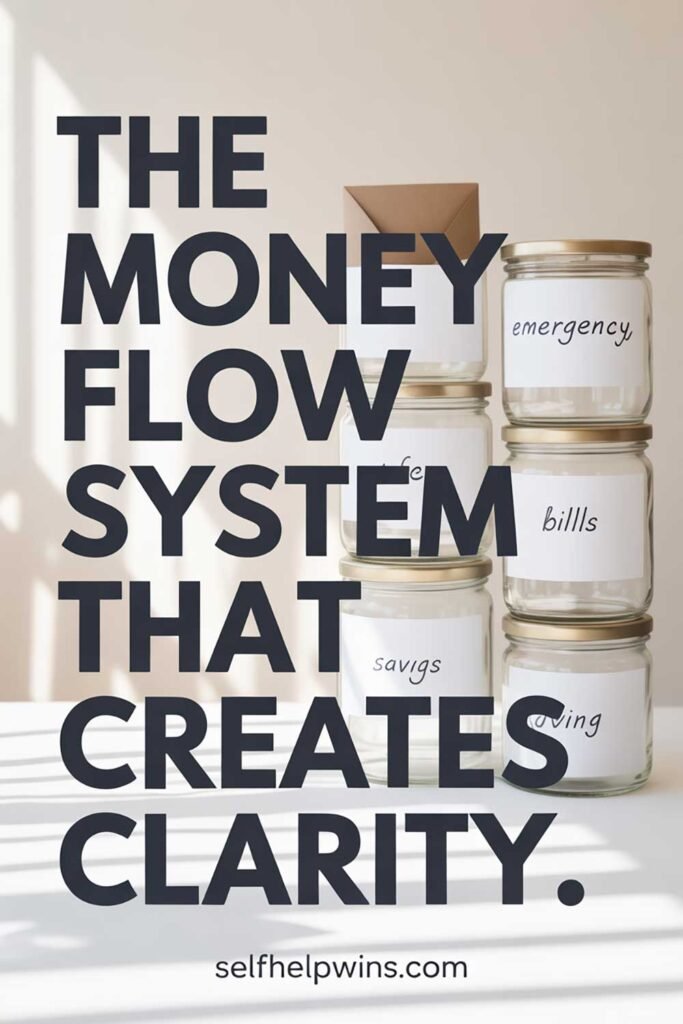
Rich People Invest Their Money and Spend What’s Left — 12 Wealth-Building Lessons That Make It Possible
The difference between building wealth and wondering where your money went comes down to one fundamental shift — and these 12 investing lessons build that shift from the ground up. Starting early with compound interest, automating investments, diversifying your portfolio, understanding index funds, avoiding emotional decisions, building multiple income streams — each lesson is backed by a real example with real numbers. Your money should be working for you. Here’s exactly how to make that happen.
The One Shift That Changes Everything
Most people operate on a simple financial pattern. They earn money. They spend it. If anything is left at the end of the month, they save or invest it. The money they invest is the money they did not spend.
Wealthy people operate on the reverse pattern. They earn money. They invest a fixed portion first — automatically, before they can spend it. Then they live on what is left. The money they spend is the money they did not invest.
That reversal is not obvious. It does not sound like much. But over twenty or thirty years, the difference between those two patterns is the difference between wondering where your money went and having money working for you around the clock. The first group spends first and invests the scraps. The second group invests first and spends everything else.
The 12 lessons in this article build the knowledge and the habits that make the second pattern possible. Each one is backed by real numbers. Read them in order, or go straight to the lesson that addresses where you are right now. Either way, start somewhere — because the best time to learn this was yesterday, and the second best time is today.
Important note: The information in this article is for educational purposes only. It is not personalised financial advice. Before making any investment decisions, please consult a qualified financial advisor who can assess your specific situation, goals, and risk tolerance.
The first and most important lesson is the one in the title. Not “save what you can.” Not “invest when you have something left over.” Invest first, every month, before you make any discretionary spending decision. Treat your investment contribution the same way you treat your rent or mortgage — as a fixed non-negotiable cost of living your life well.
The amount does not matter as much as the consistency. Investing $200 every month without fail produces far more long-term wealth than investing $500 occasionally when you remember to. The habit is the foundation. The amount scales as income grows.
The gap is not created by investing more. It is created by investing first, consistently, and giving time its space to work.
Marcus set up an automatic transfer of $300 to his investment account on the first of every month. Not when he felt flush. Not when the month had gone well. Every first of the month, before he paid anything else. He did not increase the amount for two years. He just made the habit non-negotiable. By year three, he had barely noticed the $300 leaving each month — because it always left before he had time to spend it on something else.
Compound interest means your money earns returns, and those returns then earn returns themselves. The base grows, and so does every piece that was added to it. Over short periods, this looks modest. Over long periods, it becomes extraordinary.
Albert Einstein reportedly called it the eighth wonder of the world. Warren Buffett has credited compounding as the central engine of his wealth. The key variable is not the rate of return. It is time. The longer your money compounds without interruption, the more dramatic the result.
The implication is important: the money you invest in your twenties is worth dramatically more than the same money invested in your forties. Not because the investment is different. Because the time available to compound is longer.
Two brothers. The older one invested $5,000 per year from age 22 to 32 — ten years — then stopped entirely. Total invested: $50,000. The younger one did nothing until 32, then invested $5,000 per year until age 65 — 33 years. Total invested: $165,000. At 65, both earning 10% annually: the older brother, despite investing less than a third as much, came out ahead. Why? He started ten years earlier. Those ten years of uninterrupted compounding were worth more than thirty-three years of later contributions.
The best financial system is one that requires the least willpower to maintain. Every time you have to make a conscious decision about whether to invest this month, you are introducing a risk. Maybe this month is harder. Maybe something else feels more urgent. Maybe you just forget.
Automation removes that risk. When the transfer happens automatically, on a set date, before you see the money in your spending account, the decision has already been made. The money is gone before the temptation to spend it has a chance to form.
Automate your investment contributions. Automate your emergency fund contributions. Automate your debt payments. The less your wealth-building system requires monthly decisions, the more reliably it works over years and decades.
Amara’s automated transfer went out on the 3rd of every month. In month 11 of her investing habit, she had a genuinely bad financial month — an unexpected expense, a slower-than-usual income period. On the 3rd, the transfer went out anyway. She was briefly annoyed. She looked at her account three weeks later and was glad. The annoyance had lasted an afternoon. The invested money had kept compounding.
An index fund is a type of investment that tracks a market index — like the S&P 500, which follows the 500 largest US companies. Instead of a fund manager trying to pick the best stocks, the index fund buys all of them in proportion. It does not try to beat the market. It is the market.
This matters because the evidence on active fund management — professional fund managers trying to do better than the market — is not flattering. Most of them do not beat the market. Most of them do not even match it, especially after fees.
For most people who are not professional investors, a low-cost index fund is the most rational, evidence-backed investment vehicle available. It requires no stock-picking skill. It diversifies automatically. It costs almost nothing in fees. And over long periods, it outperforms the vast majority of people who are paid to try to do better.
Investor A puts $10,000 into an index fund with a 0.05% annual expense ratio. Investor B puts the same $10,000 into an actively managed fund with a 0.64% expense ratio. Both earn 10% gross annually. After 30 years, Investor A has approximately $168,000. Investor B has approximately $147,000. The difference — roughly $21,000 — was consumed by the 0.59% fee gap. The manager was not just charging more. They cost the investor real wealth.
Fees do not feel significant in the moment. An expense ratio of 1% sounds like very little. An account management fee of $20 per month sounds manageable. But fees compound in the same way your returns do — except they compound in the wrong direction. They reduce your growing base year after year, which means every future return is calculated on a smaller number than it should be.
The fees you pay are not just the amount they state. They are that amount, compounded, for the life of the investment. That is the number that matters.
Check every investment vehicle you use for its expense ratio and any additional management or advisory fees. There is almost always a lower-cost equivalent available. The 0.05% vs 0.64% gap confirmed by the Investment Company Institute in their March 2025 research report is real and available to every investor who knows to look for it.
Priya discovered her managed mutual fund was charging 0.87% per year. She spent 20 minutes researching and found an equivalent index fund tracking the same market for 0.04%. She moved her money. She estimated, based on her balance and time to retirement, that the switch would be worth over $60,000 in final wealth. The move took less time than it took to write this paragraph.
Diversification means spreading your money across different types of investments so that no single failure can wipe out your wealth. It is not exciting. It does not produce the highest possible returns in any given year. What it does is protect you from catastrophic loss.
When you own a single stock, your financial outcome is tied to one company. When that company has a bad year — a product failure, a regulatory problem, a scandal, a change in the market — your entire investment suffers. When you own a diversified portfolio, no single company failure can take you down.
A basic diversified portfolio might include US stocks (large and small companies), international stocks, bonds, and possibly real estate investment trusts (REITs). The exact allocation depends on your age, timeline, and risk tolerance — which is why consulting a financial advisor is valuable.
Two investors in 2007. One had all their money in US financial stocks — the sector that collapsed in 2008. They lost over 70% of their portfolio. The second had a diversified index fund across multiple sectors and geographies. They lost about 38% in 2008. Both lost significantly. But the concentrated investor needed a 233% gain to recover. The diversified investor needed a 61% gain. The S&P 500 fully recovered and reached new highs by 2013. The concentrated investor, depending on their specific holdings, may never have fully recovered.
An emergency fund — typically three to six months of living expenses in a liquid savings account — is not glamorous. It does not compound at 10%. But it plays a critical role in your wealth-building system: it prevents you from having to sell your investments at the worst possible time.
The most damaging thing most investors do is sell during market downturns — at exactly the moment when prices are lowest — because they need cash for an unexpected expense and have nowhere else to get it. An emergency fund removes that pressure. You have the cash available. Your investments stay invested. The recovery happens without you having locked in the loss.
Your emergency fund does not grow impressively. What it does is protect the investments that do.
Both lost their jobs in the same week in March 2020. Investor A had a six-month emergency fund. She kept her index fund investments untouched and lived on her emergency savings while she found new work. Her portfolio recovered fully in six months. Investor B had no emergency fund and had to sell $15,000 of investments near the market low. He locked in the loss. When the market recovered, that $15,000 was no longer invested to recover with it. He missed the recovery on money he had already paid the loss on.
Every dollar of high-interest debt you carry is a dollar working against you at a guaranteed rate. A credit card charging 22% interest is producing a guaranteed 22% negative return on every dollar you owe. No investment consistently returns 22% per year. Which means that before you invest aggressively, paying off high-interest debt is almost always the highest-return move available to you.
The order that makes mathematical sense for most people: first, get your employer 401(k) match if available (this is a 50–100% instant return on your money — almost always worth capturing first). Second, build a small emergency fund. Third, aggressively pay off high-interest debt. Fourth, invest consistently. Low-interest debt — a mortgage at 4%, a student loan at 5% — is a different calculation, and the math often favours investing while carrying those debts.
Daniel had $8,000 in credit card debt at 24% interest and was contributing $200 per month to an investment account. He ran the numbers. His investment contributions were earning him approximately 10% per year. His debt was costing him 24% per year. He redirected his $200 per month plus everything he could save toward the debt. He paid it off in 14 months. Then he redirected the full former debt payment — $400 per month — into investments. He was behind by 14 months. He was ahead by eliminating the 24% drag on his net worth for the rest of his investing life.
The market goes down. It feels like it will never recover. You sell to stop the loss. The market recovers. You missed the recovery. You just locked in a loss and missed the gain. This pattern — called panic selling — is one of the most common and most expensive investment mistakes people make.
The inverse happens too. A hot stock is going up fast. Everyone is talking about it. You buy at the peak because it feels like it will keep going up. It does not. You bought at the top and watched it fall. Both of these are emotional decisions overriding rational strategy.
The solution is boring: invest regularly, stay invested, do not look at your portfolio daily, and do not make changes based on news cycles or market noise. The best investor behaviour is usually the most boring investor behaviour.
Sofia sold her index fund investments in March 2020 when the market dropped 34%. She sold to protect what she had left. By September 2020, the market had fully recovered and surpassed its previous high. Sofia had locked in a 34% loss and missed the 52% recovery gain that followed. She did not rebuy until the market was back near its peak. She lost the drop and missed the recovery — which is the most expensive version of the emotional investing pattern. She does not make market-based decisions anymore. She invests every month and looks at her portfolio once a quarter.
A single income stream has a ceiling. There are only so many hours in a day. You cannot invest more than you earn, and you cannot earn more than your primary income source produces. Building additional income streams — even small ones — removes that ceiling. Every additional dollar of income that goes directly into investments adds to the compounding base.
Additional income streams do not need to be complex. They can be: dividend income from investments (money your existing portfolio pays you), rental income, freelance work in your professional skill area, a small online business, affiliate income, or royalties from creative work. The goal is not to replace your primary income immediately. The goal is to have money coming in from more than one direction.
The key is directing additional income into investments rather than into lifestyle inflation. More money that produces more spending produces a more comfortable but not substantially wealthier life. More money that produces more investing produces a fundamentally different financial future.
Marcus spent six months building a small freelance consulting practice in his off hours. It earned him an average of $600 per month. He invested all of it — $600 per month, every month, automatically. He did not touch it. He did not increase his lifestyle with it. He just redirected it into the same index funds his primary income was already feeding. In fifteen years, that secondary income stream, if it continued at $600 per month and 10% annual return, will produce approximately $248,000 in additional wealth. That is the financial equivalent of a second career pension — from weekend work.
Real estate is not the only path to wealth, but it has produced more millionaires over the past century than almost any other asset class. It offers something most investments do not: leverage. When you buy a property with a mortgage, you control a large asset with a relatively small down payment. The property’s full value appreciates, but you only put in a fraction of that value.
Real estate also produces regular income through rent, provides tax advantages in many jurisdictions, and acts as a hedge against inflation — because property values and rents tend to rise with inflation over time.
Real estate requires more capital, knowledge, and ongoing management than index fund investing. It is not right for everyone. But for the person with the capital, the interest, and the willingness to learn the market, it can be an exceptional wealth accelerator alongside a stock market portfolio.
Kezia bought her first rental property with a 20% down payment. She rented it at a rate that covered the mortgage and generated a small monthly surplus. After seven years, a combination of appreciation and principal paydown had built enough equity to take out a second mortgage on the property. She used that equity as a down payment on a second rental property. The first property funded the purchase of the second. She did not save up a second down payment from scratch — she grew it inside the first asset.
Building wealth takes decades. Losing it can happen in months, weeks, or even days if the right protections are not in place. This final lesson is about the structures that protect what the previous eleven lessons built.
Insurance — health, life, disability, and for property owners, adequate property insurance — protects your assets from catastrophic events. An uninsured medical emergency that wipes out years of savings is a wealth-destroying event that no investment strategy can undo. Adequate insurance is not an expense. It is the protection layer of your wealth system.
Tax-advantaged accounts — 401(k), IRA, Roth IRA, and their international equivalents — protect your wealth from unnecessary taxation. Money invested in a Roth IRA, for example, grows tax-free and is withdrawn tax-free in retirement. Every year that passes without maximising these accounts is a year of unnecessary wealth loss to taxes on returns.
The final protection is simpler and often overlooked: a will, clearly stated beneficiaries on all accounts, and if your estate is significant, basic estate planning. Wealth that is not properly directed does not always go where you intend. These structures cost far less than the problems their absence creates.
Two people reach retirement with $800,000 each. One has the money in a Roth IRA — it is tax-free. The other has it in a traditional brokerage account — withdrawals are taxed as ordinary income. At a 25% effective tax rate, the second person’s $800,000 is functionally worth $600,000 after tax. Same years of investing. Same amount of money. $200,000 difference created entirely by which account the money was sitting in.
📖 More on Money, Habits, and Building the Life You Actually Want at Self Help Wins
- →The Scarcity Mindset: Why You Never Feel Like Enough and How to Change That
- →Why Earning More Doesn’t Always Make You Richer — and What Does
- →The Small Habits That Quietly Transform Everything
- →Using AI to Build Passive Income Streams
- →How to Actually Make This Your Best Year Yet
- →Follow Through: The Gap Between Knowing and Doing
Your money is either working for you or it isn’t. That is the whole distinction.
Every month that passes with uninvested money is a month of compounding that does not happen. Every year of high-interest debt is a guaranteed return working in the wrong direction. Every avoidable fee is a fraction of your future wealth silently paid to someone else. The gap between people who build wealth and people who wonder where their money went is not usually income. It is system.
The twelve lessons in this article are the system. Not all twelve at once — start with the one or two that are most immediately relevant to where you are right now. Automate your investments. Check your expense ratios. Build your emergency fund. Pay off the high-interest debt. Make your first index fund contribution.
Your money should be working for you. The system that makes that happen is not complex. It is consistent. Start today, and let time do the rest.
🛍️ Visit Our Shop
A Daily Reminder to Pay Yourself First
Hand-picked mugs and growth-minded products — small daily reminders that your money should be working as hard as you do.
Browse the Shop →Important Disclaimer, Financial Notice & Affiliate Disclosure
Not Financial Advice — Please Read Carefully: The information in this article is for general educational purposes only. It does not constitute personalised financial advice, investment advice, tax advice, or legal advice. Self Help Wins, its founder Don, and its contributors are not licensed financial advisors, investment professionals, tax professionals, or attorneys. Nothing in this article should be interpreted as a recommendation to buy or sell any specific investment, follow any specific investment strategy, or take any specific financial action.
Consult a Qualified Professional: Before making any investment, financial planning, or tax-related decision, please consult a qualified financial advisor, investment professional, or tax professional who can assess your specific financial situation, goals, risk tolerance, and applicable tax laws. What is appropriate for one person may not be appropriate for another.
Past Performance: Historical returns referenced in this article — including S&P 500 historical averages — are for illustrative purposes only. Past performance does not guarantee future results. All investing involves risk, including the potential loss of principal. Market returns vary significantly year to year. The figures used in this article are simplified examples for educational illustration and do not account for taxes, inflation, specific fee structures, or individual circumstances.
Numbers and Calculations: The compound interest calculations in this article are illustrative estimates based on stated assumptions (percentage returns, time periods, contribution amounts). Actual results will differ. The S&P 500 historical average return figure of approximately 10% referenced throughout this article is based on long-term historical data (approximately 1926–2023 per multiple cited sources). This figure is commonly used as a reference point in financial education but does not guarantee any future return. The expense ratio figures (0.05% for index funds, 0.64% for actively managed equity funds) are from the Investment Company Institute Research Perspective, Vol. 31, No. 1, March 2025 (Li and Atamanchuk). The active fund underperformance statistics (21% of active funds outperforming over 10 years through 2025; 79% of large-cap domestic equity funds underperforming the S&P 500 in 2025) are from Morningstar data cited by CNBC, February 2026.
Real Estate: Real estate investing involves significant risks including market risk, liquidity risk, interest rate risk, tenant risk, and property-specific risks. Leverage amplifies both gains and losses. The simplified real estate example in Lesson 11 does not account for mortgage interest, property taxes, maintenance costs, vacancy periods, insurance, management fees, or transaction costs, all of which would reduce actual returns. Real estate investment decisions should be made with thorough due diligence and professional advice.
Tax-Advantaged Accounts: Contribution limits, eligibility rules, and tax treatment for 401(k), IRA, Roth IRA, and other tax-advantaged accounts are set by law and change regularly. The figures and rules mentioned in this article are for illustrative purposes and may not reflect current law. Always verify current limits and rules with a qualified tax professional.
Real Stories Notice: The stories in this article are composite illustrations representing common investment experiences. They do not depict specific real individuals. The numerical examples within the stories are simplified for illustration and are not projections or guarantees.
External Links & Resources: This article may contain links to external websites. Self Help Wins does not control and is not responsible for the content, accuracy, or practices of any third-party site.
Affiliate Disclosure: Self Help Wins may contain affiliate links. If you make a purchase through one of our links, we may earn a small commission at no additional cost to you. We only recommend products and services we genuinely believe in.
Copyright Notice: All original content on this website is the copyrighted property of Self Help Wins unless otherwise noted. Reproduction without written permission is strictly prohibited. Please check our full disclaimer page, privacy policy, and terms of service for the most current information.
Copyright © Self Help Wins · All Rights Reserved · Unlock Your Best Life · Grow, Improve, Succeed